一,self含义
|
1
2
3
4
5
6
7
|
# -*- coding: utf-8 -*-class person:
def one(self,name,age):
print "you name is %s and you age is %s." % (name, age)
p = person() #绑定实例
p.one("du",22)
|
执行结果:
|
1
|
you name is du and you age is 22.
|
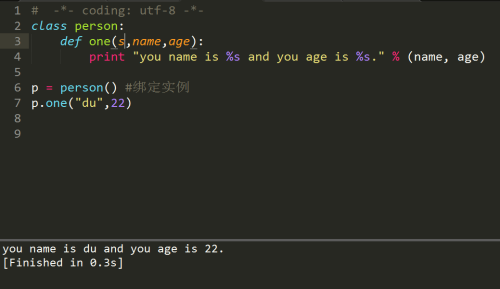
其实self可以不必写成self,但是必须要有一个参数如下图
详细了解可以参考博客:http://www.cnblogs.com/jessonluo/p/4717140.html
二,__init__初始化。
|
1
2
3
4
5
6
7
8
9
|
# -*- coding: utf-8 -*-class person:
def __init__(self,sex):
self.sex = sex
def one(self,name,age):
print "you name is %s and you age is %s and sex is %s" % (name, age, self.sex)
p = person("boy") #绑定实例
p.one("du",22)
|
执行结果:
|
1
|
you name is du and you age is 22 and sex is boy
|
其实就相当于变量sex在类里。比函数大一级别。如下面的程序,和上面的执行结果是一样的。
|
1
2
3
4
5
6
7
8
9
10
11
|
# -*- coding: utf-8 -*-class person:
sex = "boy"
def __init__(self,sex):
#self.sex = sex
pass
def one(self,name,age):
print "you name is %s and you age is %s and sex is %s" % (name, age, self.sex)
p = person("boy") #绑定实例
p.one("du",22)
|

本文转自 天道酬勤VIP 51CTO博客,原文链接:http://blog.51cto.com/tdcqvip/1950270